
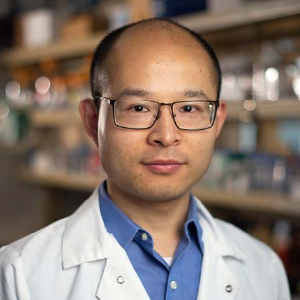
Zhaohui Gu, PhD
Assistant Professor
Beckman Research Institute of the City of Hope
Research project
Single-cell Dissecting of High-risk B-cell Acute Lymphoblastic Leukemia
Summary
B-cell acute lymphoblastic leukemia (B-ALL) is the most common cancer in children and remains a leading cause of childhood cancer death. There are different subtypes of B-ALL, and it is important to accurately identify the high-risk subtypes to provide effective treatment. However, it can be difficult to classify B-ALL subtypes because patient samples often have a low amount of leukemia cells. While treatment for B-ALL has been greatly improved, around 20% of patients still relapse and have poor clinical outcomes. In a recent study, we used a technique called RNA-seq to classify B-ALL into over 20 different subtypes. In this project, we will use a more detailed technique called single-cell RNA-seq to classify B-ALL subtypes in samples with different amounts of leukemia cells. This will allow us to identify B-ALL subtypes more sensitively and accurately. Using this single-cell technique, we will also study a particular subtype of B-ALL that is highly resistant to chemotherapy and prone to relapse after treatment. This project aims to show that single-cell analysis can be used to classify B-ALL subtypes in samples with various levels of leukemia cells. This will help doctors to diagnose B-ALL subtypes and track leukemia cells more accurately in clinical settings. We will also be able to identify the specific leukemia cells that cause relapse and study their features at a single-cell level, which will help us understand why relapse happens and find new treatment strategies.
Impact
This Leukemia Research Foundation New Investigator Research Grant was the essential catalyst for our entire project. It provided the critical "seed funding" that allowed us to pursue a high-risk, high-reward idea: that by looking at individual cancer cells, we could uncover why aggressive leukemia comes back after treatment.
First, this funding enabled us to build and validate a powerful new diagnostic tool. A major challenge in leukemia is that after treatment, the few remaining cancer cells are like "needles in a haystack," hidden among millions of healthy cells. Our new method allows us to find these rare cells and get a clear picture of their genetic makeup. As a key contribution to the field, we made this tool publicly available through a free software platform. This empowers scientists worldwide to study leukemia with the same high-resolution view.
With this powerful new tool in hand, we then made critical discoveries about how these tough cells survive. We identified a unique "energy switch" that cancer cells use to fuel their resistance to chemotherapy. We also learned that certain genetic flaws make some leukemia subtypes much more aggressive than others, which could help doctors identify high-risk patients sooner.
The combined success of building the tool (Aim 1) and making these discoveries (Aim 2) was so significant that it allowed us to secure a major, long-term grant from the National Institutes of Health (a prestigious NIH/NCI MERIT R37 award).
Looking ahead, our work will contribute to leukemia research by providing a new tool for more accurate diagnosis, discovering a new "energy switch" that can be targeted with future drugs, and offering new clues to help doctors better predict a patient's risk of relapse. Ultimately, our goal is to turn these findings into more personalized treatments and better outcomes for every child diagnosed with leukemia.
Leukemia Research Foundation grant
$150K awarded in 2023
Disease focus
Acute lymphoblastic leukemia (ALL)
Research focus
Relapse Prevention